
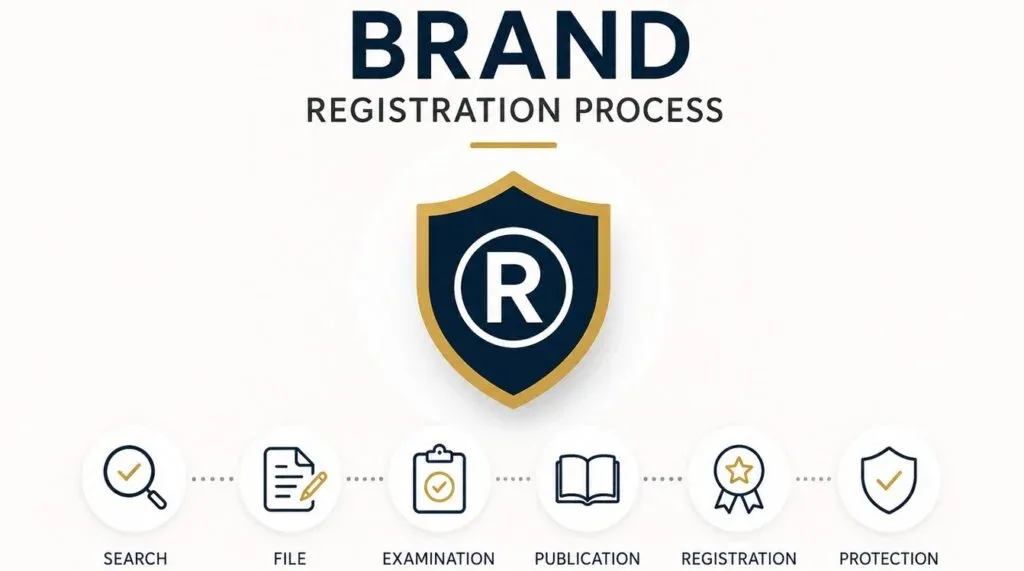
Building a strong Brand takes time, effort, and investment. Whether you are launching a startup, introducing a new product, or expanding your business, protecting your brand should be one of your first priorities.
In India, a brand is primarily protected through trademark registration. Registering your trademark gives you exclusive legal rights over your brand name, logo, slogan, or other distinctive identifiers and helps prevent others from using similar marks that may confuse customers. The registration process is governed by the Trade Marks Act, 1999 and is administered by the Trade Marks Registry under the Office of the Controller General of Patents, Designs and Trade Marks.
This guide explains the complete brand registration process in simple language.
What is Brand Registration?
Brand registration is the process of legally protecting your business identity. While people often use the term “brand registration,” the legal protection is generally obtained through trademark registration.
A trademark can protect:
- Business name
- Product name
- Company logo
- Tagline or slogan
- Brand symbol
- Label or packaging
- Combination of words and logo
Once registered, the owner receives exclusive rights to use the trademark for the registered goods or services.
Why Should You Register Your Brand?
Registering your brand offers several advantages:
- Exclusive legal rights over your brand
- Protection against unauthorized use
- Builds customer trust and credibility
- Creates a valuable business asset
- Makes licensing and franchising easier
- Helps during fundraising and business expansion
- Enables legal action against infringers
Step 1: Conduct a Trademark Search
Before filing an application, it is essential to conduct a trademark search.
The purpose is to determine whether:
- A similar trademark already exists
- Your proposed mark is available
- There is a high risk of objection or opposition
A professional trademark search considers:
- Exact matches
- Similar spellings
- Phonetic similarities
- Visual similarities
- Related goods and services
Skipping this step can lead to unnecessary delays and additional costs.
Step 2: Select the Correct Trademark Class
India follows the Nice Classification, which divides trademarks into 45 classes:
- Classes 1–34 cover goods.
- Classes 35–45 cover services.
Choosing the correct class is critical because your trademark protection applies only to the goods or services listed in the application.
For example:
- Clothing falls under Class 25.
- Software services fall under Class 42.
- Restaurant services fall under Class 43.
Some businesses may require registration in multiple classes.
Step 3: Prepare the Required Documents
The documents generally required include:
- Applicant’s name and address
- Logo (if applicable)
- Brand name
- Description of goods or services
- User affidavit (if claiming prior use)
- Power of Attorney (when filing through an attorney or agent)
- MSME or Startup certificate (if applicable)
The exact requirements may vary depending on the applicant type.
Step 4: File the Trademark Application
The application is filed using Form TM-A with the appropriate government fee. After successful filing, the Trade Marks Registry issues an application number, which can be used to track the application’s status.
Once the application is filed, you may generally begin using the ™ symbol with your brand.
Step 5: Examination by the Trademark Registry
A Trademark Examiner reviews the application to determine whether:
- The trademark is distinctive.
- It complies with legal requirements.
- It conflicts with any earlier registered or pending trademarks.
If the Examiner finds issues, an Examination Report is issued.
Common objections include:
- Lack of distinctiveness
- Descriptive marks
- Similarity with existing trademarks
- Incorrect classification
A proper legal response can often overcome these objections.
Step 6: Publication in the Trademark Journal
If the application is accepted, it is published in the Trademark Journal.
This allows third parties to oppose the registration if they believe the mark affects their rights.
The opposition period is four months from the date of publication.
If no opposition is filed—or if any opposition is successfully resolved—the application proceeds to registration.
Step 7: Trademark Registration Certificate
After completing all stages successfully, the Trade Marks Registry issues the Trademark Registration Certificate.
The owner can then use the ® symbol, which indicates that the trademark is officially registered.
The registration remains valid for 10 years and can be renewed every ten years by paying the prescribed renewal fee.
How Long Does Brand Registration Take?
The overall timeline depends on several factors, including examination, objections, and whether any opposition is filed.
A typical timeline is:
- Trademark search: 1–2 days
- Filing: 1 day
- Examination: Several months
- Journal publication
- Opposition period: 4 months
- Registration: After successful completion of all stages
While the entire registration process can take time, filing the application secures your priority date and allows you to use the ™ symbol.
Common Mistakes to Avoid
Many applicants face delays because of avoidable errors, such as:
- Choosing a descriptive brand name
- Filing in the wrong trademark class
- Skipping the trademark search
- Using incorrect applicant details
- Claiming prior use without evidence
- Ignoring examination reports
- Missing deadlines for responses
Professional guidance can help reduce these risks.
Frequently Asked Questions
Can I register my brand before starting my business?
Yes. Trademark applications can be filed on a proposed-to-be-used basis.
Can I register only a logo?
Yes. Logos can be registered independently.
Can I register only the brand name?
Yes. A word mark protects the text regardless of its design or font.
Is trademark registration mandatory?
No. However, registration provides stronger legal protection and exclusive rights.
Can an individual apply for a trademark?
Yes. Individuals, proprietorships, partnerships, LLPs, companies, trusts, and startups can all apply for trademark registration.
Conclusion
Your brand is one of your business’s most valuable assets. Registering it early helps protect your reputation, prevents misuse by competitors, and strengthens your legal rights as your business grows.
Whether you are launching a startup, building an online business, or expanding an established company, securing your trademark is a smart long-term investment.
At IPHelm, we assist businesses, startups, entrepreneurs, and professionals throughout the trademark registration process—from conducting comprehensive trademark searches and filing applications to responding to examination objections and handling opposition proceedings—making brand protection straightforward and hassle-free.